The Complete VA Home Loan Guide for Fort Campbell Buyers (2026)
I served eight years in the Army as a combat medic, stationed right here at Fort Campbell. When I got out and transitioned into real estate, I made a deliberate decision to specialize in VA buyers — because I've been in those boots, and I know how confusing the process feels when you're navigating it for the first time while also trying to manage formations, deployments, PCSing, ETSing, and the rest of military life.
The VA home loan is, without question, the single most powerful homebuying tool in this market. I say that not as a sales pitch but as someone who has used it multiple times for my own homes and has guided many buyers through it. And I can also tell you that it is consistently the most misunderstood and underused benefit in the military community.
This guide covers everything — from who qualifies to how the funding fee works, from what MPRs mean on a real home to how BAH translates into buying power in today's Clarksville market. No jargon, no fluff. Let's get into it.
Table of Contents
- What the VA Loan Actually Is — And What It Isn't
- Who Qualifies: Service Requirements and Eligibility
- The Five Core Benefits That Make VA Loans Exceptional
- Understanding VA Entitlement — The Part That Confuses Everyone
- The Funding Fee: What It Is, How Much, and Who's Exempt
- VA Appraisals and Minimum Property Requirements (MPRs)
- How BAH Translates into Buying Power at Fort Campbell
- Special Pays, Bonus Income, and the Lender Problem
- Common VA Loan Myths That Cost Veterans Real Money
- How to Use Your VA Loan in Clarksville: Step-by-Step
1. What the VA Loan Actually Is — And What It Isn't
The VA home loan is a mortgage benefit administered by the U.S. Department of Veterans Affairs. The VA doesn't lend you the money directly — private lenders do, using their own funds — but the VA guarantees a portion of the loan. That government guarantee is why lenders are willing to offer zero down payment, no private mortgage insurance, and rates that consistently beat conventional financing.
In 2026, the VA guaranty for borrowers with full entitlement has no loan limit. That means you can buy a $800,000 home with zero down payment as long as your lender approves you. This changed permanently in 2020, and a lot of people still don't know it.
What it isn't: it's not a welfare program, it's not charity, and it's not limited to low-income buyers. It's a compensation benefit you earned through your service, designed to make homeownership accessible for the people who defend this country. Use it without apology.
2. Who Qualifies: Service Requirements and Eligibility
VA loan eligibility is based on your military service history. Here's the straightforward breakdown:
Active Duty:
- 90 consecutive days of active duty service
Veterans (wartime service):
- 90 days of active duty during a declared period of war
Veterans (peacetime service):
- 181 consecutive days of active duty
National Guard / Reserve Members:
- 6 years of service in the Guard or Reserves, OR
- 90+ days of active duty service under Title 10 or qualifying Title 32 orders
Surviving Spouses:
- Un-remarried surviving spouses of a veteran who died in service or from a service-connected disability
- Spouses who remarried after age 57 may also qualify under certain conditions
Discharge Requirements: You must have been discharged under conditions other than dishonorable. If your discharge was other-than-honorable (OTH), there's a character of discharge review process available through the VA that may still allow you to access benefits.
How to get your Certificate of Eligibility (COE): Your COE is the document that proves to a lender you're eligible. You can obtain it through:
- Your VA portal (fastest)
- Through your VA-approved lender (they can pull it electronically)
- VA Form 26-1880 by mail (slower)
Most lenders who work regularly with VA loans can pull your COE within minutes. Don't let this step slow you down.
3. The Five Core Benefits That Make VA Loans Exceptional
Let's be direct about why this benefit is so powerful, in concrete dollar terms.
Benefit #1: Zero Down Payment On a $310,000 home, a conventional buyer needs $15,500–$62,000 (5%–20% down). A VA buyer needs exactly zero. That is your retirement account staying intact. That is your emergency fund not being wiped out. That is you getting into a home years earlier than you otherwise could.
Benefit #2: No Private Mortgage Insurance (PMI) Conventional loans require PMI when you put less than 20% down. PMI typically runs 0.5%–1% of the loan per year — on a $310,000 loan, that's $1,550–$3,100 annually, or $129–$258 every single month, for years, without building any equity. VA loans have no PMI. Ever.
Benefit #3: Competitive Interest Rates VA loan rates consistently run 0.25%–0.50% below comparable conventional rates. On a $310,000 loan at 6.5% vs. 6.0%, that difference is about $97/month — $1,164/year — $34,920 over 30 years. The rate advantage compounds every single month you own the home.
Benefit #4: Limited Closing Costs The VA limits what lenders can charge buyers. Certain fees (like underwriting fees from the lender's side) are restricted or prohibited entirely. This doesn't eliminate closing costs, but it keeps lenders from stacking fees. You can also ask the seller to pay up to 4% in concessions toward your closing costs, which is particularly achievable in today's balanced market.
Benefit #5: It's Reusable and It's Yours for Life You don't use up your VA benefit. Once you sell your home and pay off the VA loan, your full entitlement restores and you can use it again. Some veterans have used their VA loan 3, 4, even 5 times over the course of their lives. And in certain situations, you can use a VA loan on a second property while still having a first VA loan active — though the math around entitlement gets more complex in that scenario. This is one of the ways I have personally used my VA loan entitlement. I purchased a home in Clarksville, using the VA loan, when we PCS'd here from Fort Knox. A couple of years later, we purcchased another home, also using my VA loan entitlement, while keeping the first home as a rental property. It wasn't as complicated or as scary as it may seem.
4. Understanding VA Entitlement — The Part That Confuses Everyone
Entitlement is the most confusing concept in the VA loan universe. Here's the simple version:
The VA doesn't lend you money — it guarantees a portion of what the lender loans. Your entitlement is the amount the VA will guarantee. There are two types:
Full Entitlement: If you've never used a VA loan, or you've used one and paid it off and sold the home, you have full entitlement. With full entitlement in 2026:
- No VA loan limit (you can borrow any amount your lender approves)
- Zero down payment on any purchase price
- The 2026 baseline conforming limit ($832,750) is largely irrelevant to you
Partial (Remaining) Entitlement: If you have an active VA loan you haven't paid off, you have partial entitlement. You may still be able to buy a second home using remaining entitlement, but you may need a down payment on the portion not covered by the guarantee. This is where lenders who don't specialize in VA loans frequently get the math wrong — which costs you money.
The practical example most people ask about: Can you have two VA loans at once? Yes, but only if you have sufficient remaining entitlement to cover the second purchase. An experienced VA lender can calculate this in about 10 minutes. Don't assume you can't — and don't assume you can without the calculation.
5. The Funding Fee: What It Is, How Much, and Who's Exempt {#funding-fee}
The funding fee is the one cost unique to VA loans, and it's the source of the most misunderstanding.
Here's the simple version: because VA loans don't require PMI, the VA charges a one-time upfront fee that funds the program. This fee is typically rolled into the loan — you don't pay it out of pocket at closing.
2026 Funding Fee Rates (Purchase Loans):
| Down Payment | First Use | Subsequent Use |
|---|---|---|
| 0% | 2.15% | 3.30% |
| 5%–9.99% | 1.50% | 1.50% |
| 10%+ | 1.25% | 1.25% |
On a $310,000 loan with zero down (first use), the funding fee is $6,665 — rolled into the loan, so your actual loan amount becomes $316,665. Your monthly payment on the funding fee is roughly $44/month. Compare that to $129–$258/month in PMI on a conventional loan and you're still winning significantly.
Who is EXEMPT from the funding fee (pays $0):
- Veterans receiving VA disability compensation for a service-connected disability
- Veterans who would be entitled to receive compensation but for active duty status
- Surviving spouses of veterans who died in service or from a service-connected disability
- Purple Heart recipients on active duty at closing
If you have a service-connected disability rating of 10% or higher, you pay zero funding fee. On a $310,000 loan, that's $6,665 saved at closing. If you earned a disability rating after you used a VA loan and paid the fee, you can actually request a refund.
6. VA Appraisals and Minimum Property Requirements (MPRs)
This is the section where VA buyers run into the most surprises during the transaction — so read this carefully.
A VA appraisal does two things that a conventional appraisal does not:
- Determines market value (like all appraisals)
- Evaluates whether the property meets Minimum Property Requirements (MPRs)
MPRs are the VA's standards ensuring the home is safe, sanitary, and structurally sound — the "three S's." If a home fails to meet MPRs, the VA will not guarantee the loan until the issues are corrected. This is designed to protect you from buying a home that's unsafe or unsound.
What VA appraisers commonly flag:
- Roof with insufficient remaining life or active leaks
- Peeling or flaking paint on pre-1978 homes (lead paint concern)
- Standing water or drainage problems near the foundation
- Exposed or damaged electrical wiring
- Non-functioning HVAC system or no permanent heat source
- Active mold or evidence of moisture intrusion
- Broken windows that create safety hazards
- Missing handrails on stairs
- Inaccessible crawlspaces
What VA appraisers don't flag:
- Cosmetic issues (outdated finishes, dated décor, worn carpet)
- Normal wear and tear
- Minor repairs that don't affect safety or habitability
The practical impact for Clarksville buyers:
In a market where 42% of listings have had price reductions, you're often looking at homes where sellers are motivated to move. If an MPR item comes up, in most cases sellers will either fix it or negotiate a credit. I've seen sellers credit back $3,000–$8,000 for MPR repairs rather than delay the closing.
The one scenario where MPRs cause real problems: extremely distressed properties. If you're looking at a home that's been vacant for two years, has a failing roof, and shows evidence of water damage throughout — don't be surprised if the VA appraisal has serious issues. Either be ready for a longer negotiation process, or choose a property in better condition.
One thing I tell every VA buyer: do not skip the home inspection just because the VA requires an appraisal. The VA appraisal checks for MPR compliance — it does not check the age and condition of every mechanical system in detail. A $400 home inspection can tell you that the HVAC is 16 years old, the water heater is on its last legs, and the electrical panel has a known recall issue. That information is worth thousands.
7. How BAH Translates into Buying Power at Fort Campbell
One of the most powerful things about being stationed at Fort Campbell as a homebuyer is that your BAH can essentially cover your mortgage payment — meaning you can own a home with your housing allowance while your base pay covers everything else.
Here's how the math works in 2026:
2026 Fort Campbell BAH Rates (with dependents):
| Rank | Monthly BAH |
|---|---|
| E-4 | $1,587 |
| E-5 | $1,815 |
| E-6 | $1,938 |
| E-7 | $1,956 |
| O-3 | $2,085 |
What that BAH buys at today's VA loan rates (~6.5%):
| Rank | BAH | Approx. Home Price (PITI) |
|---|---|---|
| E-5 | $1,815 | ~$250,000–$265,000 |
| E-6 | $1,938 | ~$270,000–$285,000 |
| E-7 | $1,956 | ~$275,000–$290,000 |
| O-3 | $2,085 | ~$290,000–$310,000 |
Note: PITI (principal, interest, taxes, insurance) on a VA loan at $265,000 with 0% down at 6.5% comes out to approximately $1,750–$1,850/month depending on local tax rates and insurance. Many buyers are finding homes in the $250,000–$285,000 range where their entire mortgage payment is covered by BAH alone.
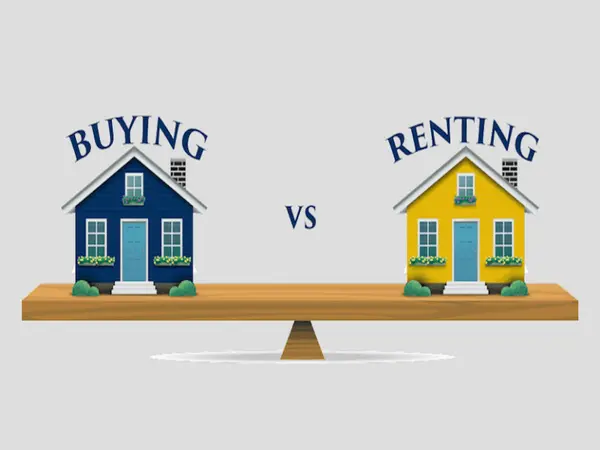
The renters' reality: The average 3-bedroom rental near Fort Campbell runs $1,400–$2,000/month in 2026. Many service members are paying their full BAH in rent, building zero equity, and having nothing to show for it when PCS time comes. Buying and renting the home out when you PCS is a genuine path to long-term wealth that thousands of Fort Campbell veterans have used — and that your VA loan makes possible.
8. Special Pays, Bonus Income, and the Lender Problem
Here's something that costs VA buyers real money, and almost nobody talks about it openly:
National VA lenders frequently undercount military income.
Active-duty soldiers at Fort Campbell often receive special pays beyond their base pay: Jump pay, Hazardous Duty pay, Special Forces specialty pay, language pay, reenlistment bonuses, and more. When handled correctly by an experienced VA lender, these can add $15,000–$30,000 to your qualifying loan amount.
When handled by a lender who doesn't specialize in military files — and doesn't know how to document and treat these pays — they may be partially or completely excluded from your qualifying income. That turns a buyer who qualifies for $310,000 into one who qualifies for $275,000. That's a real house you're losing access to because the lender got the paperwork wrong.
The fix is simple: use a VA lender who has underwritten hundreds of LES documents from Fort Campbell. They know exactly how special pays are documented, what the two-year history requirement looks like for bonuses, and how to present your income package to get you the maximum loan amount you deserve.
This is one of the most important pieces of advice I give to every military buyer: the lender you choose matters as much as the home you choose. I have a short list of lenders in this market who I trust with my buyers' VA files. Reach out and I'll make the introduction.
9. Common VA Loan Myths That Cost Veterans Real Money
These are the ones I hear constantly, and every one of them costs people real money or delays their purchase unnecessarily.
Myth #1: "VA loans take forever and sellers won't accept them." This was partially true in 2020–2021 when every house had 15 offers and sellers could pick and choose. In 2026's balanced Clarksville market, a clean VA offer with a pre-approval from a VA-experienced lender competes effectively. The appraisal is the only real variable, and experienced agents and lenders know how to set appropriate timelines. I close VA loans in 30–45 days routinely.
Myth #2: "I can only use my VA loan once." False. VA entitlement is restorable and reusable throughout your lifetime. Once you sell your home and pay off the VA loan, full entitlement restores. I have buyers who are on their third, fourth, and fifth VA purchase.
Myth #3: "VA loans are only for first-time buyers." False. There is no first-time buyer requirement. VA loans are available to any eligible veteran or active-duty member who meets service, income, and credit requirements — whether it's their first home or their fifth.
Myth #4: "I need perfect credit for a VA loan." The VA itself sets no minimum credit score. Most VA lenders work with scores down to 580–620. Some specialized lenders work down to 500 with compensating factors. If your credit has taken hits — from deployment, divorce, or financial hardship — don't assume you're out of the game. Talk to a VA lender first.
Myth #5: "The VA funding fee makes the loan not worth it." The funding fee on a first-use, zero-down purchase is 2.15%. On a $300,000 loan, that's $6,450 rolled into your loan. But you're not paying $1,500–$3,000/year in PMI that you would on a conventional loan with less than 20% down. The funding fee is recovered in PMI savings in roughly 2–4 years — and then you're ahead every month after that for the life of the loan.
Myth #6: "I can use a VA loan to buy a rental property." Partially false. VA loans require owner-occupancy — you must intend to live in the home as your primary residence within 60 days of closing. However, when you PCS to your next duty station, you can convert your VA-financed home to a rental. This is exactly how many Fort Campbell veterans have built real estate portfolios, and it is exactly what I did!
10. How to Use Your VA Loan in Clarksville: Step-by-Step
Here's the process, simplified:
Step 1: Confirm your eligibility If you're active duty, you qualify. If you're a veteran, confirm your service history meets the requirements above. Your lender can pull your COE electronically in most cases.
Step 2: Choose a VA-experienced lender and get pre-approved Don't use a lender who processes one VA loan a month. Find someone who does this daily, understands military income documentation, and knows the Clarksville market. I'll connect you with the right people. Your pre-approval should account for all your qualifying income, including special pays.
Step 3: Get a buyer's agent who knows VA transactions I've been through this process personally as a veteran and professionally as a REALTOR® for many years. Your agent needs to know how to write a VA offer, how to navigate MPR issues during appraisal, and how to communicate timelines to listing agents so your offer is taken seriously.
Step 4: Shop with purpose With your pre-approval in hand, we'll target homes that are likely to pass VA MPRs (well-maintained, occupied, no major deferred maintenance visible) in your price range and preferred neighborhood. Pre-1978 homes aren't off-limits, but we'll note the peeling paint MPR risk and factor it into our offer strategy.
Step 5: Write a strong offer In today's Clarksville market, a clean VA offer at or slightly below list price, with a realistic appraisal contingency and 30–45 day close, competes well. We can often negotiate seller contributions toward your closing costs — which in a balanced market with motivated sellers is very achievable.
Step 6: Navigate the appraisal Your lender orders the VA appraisal. The appraiser checks value and MPRs. If MPR items come up, we address them through seller negotiations. Most MPR issues are fixable and don't kill deals — they just require an experienced agent who knows how to handle them.
Step 7: Close and take ownership You've earned this. Close, get your keys, and start building the equity your VA benefit was designed to help you build.
Ready to Use Your Benefit?
If you're stationed at Fort Campbell — or a veteran living in the Clarksville area — and you haven't used your VA loan benefit yet, let's talk. I know this market, I know this process, and I know how to make sure you're not leaving money on the table.
Start here → 📞 931-802-9960 📧 hleproperties@gmail.com
Landon Castillo is a licensed REALTOR® with Real Broker LLC (TN License #356633) in Clarksville, TN. He is a veteran of eight years in the U.S. Army, served as a combat medic at Fort Campbell, and has specialized in VA buyers for over 13 years. VA loan details reflect 2026 program guidelines; consult a licensed lender for current rates and terms specific to your situation.
Related Reading:
Categories
Recent Posts