Beyond the Mortgage: What Are the Hidden Costs of Homeownership in Clarksville, TN?

The mortgage payment is what buyers focus on. It's the number on the pre-approval letter, the figure in the listing calculator, and the payment they're mentally qualifying themselves against when they decide what they can afford.
It's also only part of what homeownership actually costs.
According to a 2026 analysis by Pearl, the average American homeowner spends $21,400 per year on costs beyond the mortgage, including maintenance, insurance, property taxes, and utilities. That's $1,783 per month on top of the principal and interest payment most buyers are planning around.
Source: Pearl Home Maintenance Cost Annual Report 2026
I've watched buyers get surprised by these costs their first year of ownership more times than I can count. Not because they weren't smart or careful, but because nobody sat down with them before closing and walked through the full picture.
This guide does that. Every cost category, current Clarksville-specific numbers where they exist, and the realistic annual total you should be budgeting for. Read it before you close, not after.
Table of Contents
- Why the Mortgage Payment Is Only the Beginning
- Property Taxes in Montgomery County
- Homeowners Insurance: The Tennessee Reality
- HOA Fees: Who Pays Them and How Much
- Maintenance and Repairs: The Cost Nobody Budgets Correctly
- The Big-Ticket Systems: What They Cost When They Fail
- Clarksville-Specific Issues: What Middle Tennessee Homes Need
- Utilities: The Number That Changes When You Own
- The Costs That Hit at Closing and Keep Coming
- Building Your Complete Budget: The Real Monthly Number
1. Why the Mortgage Payment Is Only the Beginning
The mortgage payment, principal and interest, is what lenders qualify you on. Debt-to-income ratios, loan limits, and pre-approval amounts are all calculated against this number. What lenders do not qualify you on is everything else: maintenance, insurance, taxes, HOA, utilities, and the emergency repairs that don't care about your budget.
According to Bankrate's 2025 Homeowner Regrets Survey, 42% of homeowners who regretted their purchase cited maintenance and hidden costs as higher than expected, making it the most commonly reported source of frustration with homeownership. Source: SelectHomeWarranty, Annual Cost of Home Maintenance 2026
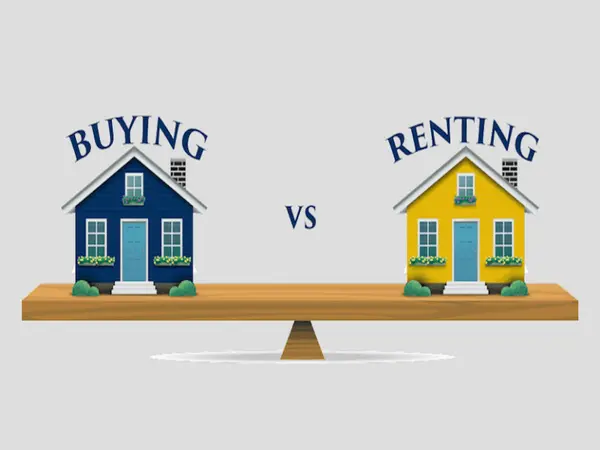
This matters in Clarksville's specific market for a few reasons. The city has a large population of first-time buyers and military families new to homeownership, many of whom are going from renting, where maintenance is the landlord's problem, to owning, where every system failure is their expense. Understanding the full cost picture before you buy is not pessimism. It's the difference between a home that enriches your financial life and one that strains it.
2. Property Taxes in Montgomery County
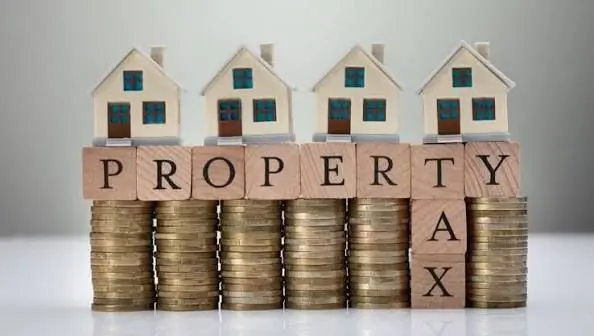
Property taxes are the most predictable of the hidden costs. They're calculable before you close and they're escrowed into your monthly payment by most lenders. But many buyers don't fully internalize the monthly number until they see it.
Current rates (fiscal year 2026-27):
- Montgomery County: $2.10 per $100 of assessed value
- City of Clarksville (if inside city limits): $1.01 per $100 of assessed value
- Combined in-city rate: $3.11 per $100 of assessed value
Tennessee assesses residential property at 25% of market value. So on a $315,000 home:
Inside city limits: $315,000 × 25% = $78,750 assessed value $78,750 ÷ 100 × $3.11 = $2,449/year | $204/month
Outside city limits (county only): $315,000 × 25% = $78,750 assessed value $78,750 ÷ 100 × $2.10 = $1,654/year | $138/month
The $66/month difference between in-city and county-only is real and worth understanding when comparing homes at similar prices in different locations.
For a complete breakdown of how Montgomery County property taxes work, including the veteran exemption that can save 100% disabled veterans over $1,500/year, read How Do Property Taxes Work in Clarksville, TN?
3. Homeowners Insurance: The Tennessee Reality
Tennessee's homeowners insurance market has become significantly more expensive in recent years, and buyers need to budget for it honestly.
According to a LendingTree analysis released in June 2026, Tennessee homeowners now pay an average of $3,408 per year for homeowners insurance, ranking as the 7th most expensive state in the nation and approximately 42% above the national average of $2,395. Source: ASIG Tennessee Home Insurance Costs 2026
For Clarksville specifically, Insure.com's rate analysis puts the average annual premium at $2,712 for a home with $300,000 in dwelling coverage, $100,000 in liability, and a $1,000 deductible. Source: Insure.com Clarksville Average Homeowners Insurance
That's approximately $226/month built into your escrow payment.
Why Tennessee insurance costs are elevated:
Tennessee sits in an increasingly active weather corridor. The state experiences significant tornado activity, therefore, weather/wind coverage accounts for some of the largest rate adjustments in recent carrier filings. Standard homeowners policies cover wind and hail damage but do NOT cover flooding. This distinction matters in Clarksville, where approximately 10% of properties carry significant flood risk over a 30-year ownership horizon.
Flood insurance: a separate cost many buyers skip
Standard homeowners insurance does not cover flood damage. Period. If your home is in a FEMA-designated flood zone, your lender will require a separate flood insurance policy. If you're outside a designated flood zone but near the Cumberland River or in a lower-elevation area of Montgomery County, you may want to consider it anyway.
Flood insurance through the National Flood Insurance Program (NFIP) typically runs $700–$2,500/year depending on the home's elevation and flood zone designation. For homes not in a high-risk zone, private flood policies can often be obtained for $400–$900/year.
What to do: Before you close, get at least three insurance quotes. Don't accept the lender's placeholder number in your loan estimate. The difference between the highest and lowest quote on the same policy in this market can be $400–$800/year.
4. HOA Fees: Who Pays Them and How Much
Not every home in Clarksville has an HOA, but a significant portion of new construction communities do, and the fee is permanent, predictable, and easy to underestimate if you're focused on the purchase price.
Nationally, 67% of newly completed homes in 2024 are part of HOA communities, up from 49% in 2011. In Tennessee, approximately 18.8% of homeowners report paying HOA dues, with a median monthly fee of $79, one of the more affordable states. Source: iPropertyManagement HOA Statistics 2026
In Clarksville's active new construction subdivisions, HOA fees typically run:
- Basic subdivision HOA (common area maintenance, entrance, signage): $300–$600/year | $25–$50/month
- Community with pool and amenities: $600–$1,200/year | $50–$100/month
- Higher-end communities with clubhouse, fitness center, multiple amenities: $1,200–$2,400/year | $100–$200/month
For Clarksville's established neighborhoods, Sango, St. Bethlehem, older North Clarksville subdivisions, HOAs are less common and typically carry lower fees when present.
What HOA fees cover (varies by community):
- Maintenance of common areas, entrances, and landscaping
- Community amenities (pool, clubhouse, fitness center, walking trails)
- Reserve fund for future infrastructure repairs
- Community management company fees
- Common area lighting and irrigation
What HOA fees do NOT cover: your individual home's maintenance, your lawn care (in most single-family HOAs), or any interior systems.
Before you buy in an HOA community, request:
- The current HOA fee amount and payment schedule
- The HOA's reserve fund status (is it adequately funded?)
- Any pending special assessments
- The full CC&Rs (covenants, conditions, and restrictions). These govern what you can and cannot do with your property
A special assessment, a one-time charge levied on all HOA members for a major repair or capital improvement, can range from a few hundred dollars to several thousand. Underfunded HOA reserves are one of the more common unpleasant surprises for new homeowners in communities with aging amenities.
5. Maintenance and Repairs: The Cost Nobody Budgets Correctly
This is the largest and most variable of all the hidden costs, and it's the one that catches buyers most off guard, particularly those coming from renting, where maintenance was somebody else's problem.
The standard industry guidance: budget 1%–3% of your home's value annually for maintenance and repairs. On a $315,000 Clarksville home, that's $3,150–$9,450/year. Source: ConsumerAffairs Home Maintenance Cost Breakdown 2026
The real number tends to be higher. Pearl's 2026 annual report found that the average homeowner spends $8,808 per year on maintenance alone, more than double the commonly cited 1% rule for a median-priced home. Source: Pearl Home Maintenance Cost Annual Report 2026
How to calibrate the rule for your specific home:
The 1% rule is a baseline for a newer home in good condition. Scale it based on your home's actual situation:
| Home Age / Condition | Recommended Annual Budget |
|---|---|
| New construction (under 5 years) | 0.5%–1% of value |
| 5–15 years, good condition | 1%–1.5% of value |
| 15–30 years, maintained | 1.5%–2% of value |
| 30+ years OR deferred maintenance | 2%–4% of value |
On a $275,000 North Clarksville home built in 2008 (approximately 17 years old), the realistic maintenance budget is $4,125–$5,500/year, or $344–$458/month. That's money that needs to exist in a dedicated savings account before something breaks, not scrambled together after the fact.
Routine annual maintenance to budget for:
These are the predictable, recurring costs that many buyers don't think of as "maintenance" but add up consistently:
- HVAC service (bi-annual tune-up): $150–$300/year
- Gutter cleaning (twice yearly): $150–$300/year
- Pest control (quarterly service): $400–$600/year, particularly relevant in Middle Tennessee
- Lawn care (if not DIY): $1,200–$2,400/year
- Dryer vent cleaning: $100–$150/year
- Water heater flush: $75–$150/year
- Smoke and CO detector battery replacement: $30–$50/year
- Air filters (HVAC): $80–$200/year depending on home size and filter quality
Total routine annual maintenance: $2,185–$4,200/year without touching a single repair item.
6. The Big-Ticket Systems: What They Cost When They Fail
Every major system in your home has a lifespan. When it expires, you pay, and the timing is never convenient. Here's what the major replacements cost in the Clarksville market:
HVAC System Expected lifespan: 12–18 years Replacement cost (full system includes a furnace, air handler, and condenser): $6,000–$12,000 In Clarksville's climate, hot, humid summers with AC running hard from April through October, HVAC systems work harder and may reach the lower end of their lifespan. When buying a resale home, always ask for the age of the HVAC system. A 13-year-old unit in a home you're planning to own for 7 years is a replacement you should budget for.
Roof Expected lifespan: 20–25 years (standard asphalt shingles) Replacement cost: $8,000–$20,000 depending on size, pitch, and materials Montgomery County's climate, storms, UV exposure, humidity, is moderately hard on roofs. Homes built in the early 2000s are approaching replacement territory. A roof inspection at the time of purchase tells you where you stand.
Water Heater Expected lifespan: 10–15 years (tank), 15–20 years (tankless) Replacement cost: $800–$2,000 (tank) | $1,500–$3,500 (tankless) Water heaters typically fail without warning. Knowing the age of yours at closing is basic due diligence.
Electrical Panel Expected lifespan: 25–40 years Replacement cost: $2,000–$4,500 Homes built before 1990 may have panels with known issues or undersized service for modern electrical loads. This is one of the items a thorough home inspection will flag.
Plumbing Varies significantly by home age and pipe material Emergency repairs (burst pipe, major leak): $500–$5,000+ Sewer line replacement: $3,000–$15,000 depending on depth and material In older Clarksville homes, cast iron drain pipes are common and have a finite lifespan. A sewer scope inspection ($150–$300) before closing is one of the most valuable optional add-ons available to buyers of pre-2000 homes.
Foundation and Structural Repairs vary dramatically: $2,000–$30,000+ Tennessee's clay-heavy soil expands and contracts significantly with moisture levels, which can cause foundation movement over time. Not every crack is serious, but every crack deserves evaluation by a structural engineer, not just a general inspector.
7. Clarksville-Specific Issues: What Middle Tennessee Homes Need
Beyond the universal homeownership costs, Clarksville buyers face a few specific maintenance realities tied to the region's climate and soil conditions.
Crawlspace Moisture: The Most Common Significant Issue in This Market
The vast majority of pre-2010 homes in Clarksville have crawlspace foundations, a design that makes sense architecturally but creates an ongoing moisture management challenge in Tennessee's humid climate.
Montgomery County's clay-heavy soil retains water. Combined with Clarksville's significant annual rainfall and high summer humidity, crawlspaces in this market are prone to moisture accumulation, vapor barrier degradation, and, in neglected cases, wood damage and fungal growth.
Basic crawlspace maintenance:
- Vapor barrier inspection and replacement as needed: $500–$2,000
- Proper drainage maintenance around foundation: variable
- Crawlspace encapsulation (full moisture remediation): $5,000–$15,000
I tell every buyer of a pre-2010 Clarksville home: add a crawlspace-specific inspection to your standard home inspection. It costs $100–$200 and tells you definitively what you're dealing with before you own it.
Pest Control: Not Optional in Middle Tennessee
Tennessee's climate is hospitable to termites, carpenter ants, and a range of other wood-destroying insects. A termite inspection at closing is standard and typically required by lenders. Beyond the inspection, ongoing pest control service, quarterly treatments, is a genuine annual cost for Clarksville homeowners, not an optional luxury.
Annual pest control service: $400–$600/year Termite bond (annual renewal): $150–$400/year Termite damage repair if discovered: $1,500–$10,000+ depending on extent
Storm Preparedness and Weather-Related Maintenance
Middle Tennessee sees significant storm activity, tornadoes, severe thunderstorms, and occasional ice storms in winter. Clarksville homeowners need to budget for:
- Tree trimming (overhanging limbs near home or power lines): $300–$1,500/year depending on lot
- Gutter maintenance (cleaning, repair, replacement): $150–$500/year
- Driveway crack sealing (freeze-thaw cycles): $100–$300 every few years
Drainage and Grading
Several Clarksville neighborhoods, particularly in areas near the Cumberland River and in lower-elevation zones, have drainage challenges. Poor grading around the foundation is one of the leading contributors to crawlspace moisture and, in severe cases, foundation issues. Budget $500–$2,500 for grading correction if the inspection identifies drainage problems.
8. Utilities: The Number That Changes When You Own
Renters often underestimate how much utilities change when they move from an apartment to a house, specifically because house square footage, older systems, and less insulation drive higher energy costs.
Electricity (Tennessee Valley Authority territory)
Most of Clarksville is served by TVA through local distributors (primarily CDE Lightband). Average residential electric bills in Tennessee run approximately $130–$180/month for a typical home, but this varies significantly by home size, insulation quality, HVAC efficiency, and season.
Older homes (pre-2000 construction) with original HVAC systems and minimal insulation upgrades can see summer cooling bills of $200–$350/month. New construction homes with modern insulation, low-E windows, and high-efficiency HVAC systems run meaningfully less, one of the genuine financial advantages of new over resale in this market.
Water and Sewer
Clarksville's water and sewer service is provided by the City of Clarksville (for city-limits properties) or well/septic systems (for rural west county properties). Average monthly water and sewer bill for a family of four in Clarksville: approximately $60–$90/month.
Properties with septic systems require periodic pumping, every 3–5 years at approximately $300–$600 per pump, and eventual system replacement (significant cost: $8,000–$20,000) when the system reaches end of life.
Trash and Recycling
City of Clarksville residents pay approximately $25–$35/month for trash and recycling pickup, included on the utility bill. County residents outside city limits arrange their own service or use transfer stations.
Internet and Cable
Average monthly cost for internet service in Clarksville: $60–$120/month depending on provider and speed tier. CDE Lightband (the city's utility) offers competitive fiber internet service within city limits.
Total utility estimate for a typical Clarksville homeowner: $275–$425/month depending on home size, age, and usage patterns.
9. The Costs That Hit at Closing and Keep Coming
A few costs deserve specific attention because they appear at closing and then recur in ways buyers don't always anticipate.
Mortgage Insurance (PMI)
Conventional loans with less than 20% down require private mortgage insurance. In Clarksville's market, where many buyers are putting 5%–10% down, PMI is a real monthly cost.
Typical PMI cost: 0.5%–1.5% of the loan amount annually On a $290,000 loan: approximately $121–$363/month
PMI is not permanent, it is supposed to drop off automatically when your loan balance reaches 80% of the original appraised value, or you can request cancellation when you reach 20% equity. Be sure to watch this closely as it it notalways automatically removed. But in the early years of a loan, it's a real payment that many buyers mentally assign to "mortgage" without accounting for separately.
VA loans have no PMI, ever. This is one of the most significant financial advantages of the VA loan benefit.
Home Warranty
A home warranty is an optional annual service contract that covers repair or replacement of specific systems and appliances. It is not homeowners insurance and it is not a substitute for a home inspection. What it does is provide a cost ceiling on certain failures, instead of a $4,000 HVAC repair bill, you pay a service call fee ($75–$150) and the warranty company covers the rest (within the contract terms).
Cost: $400–$800/year for basic coverage | $800–$1,500/year for comprehensive coverage
Home warranties have exclusions and limitations, pre-existing conditions, improper installation, and certain system types are commonly excluded. Read the contract before you pay for one. They're genuinely useful for resale buyers with older systems; they're less necessary on new construction where builder warranties cover most of the same ground.
Landscaping and Lawn Care
This is the cost that surprises buyers moving from apartments most dramatically. Maintaining a half-acre lot in Clarksville's growing season, March through October, takes either significant personal time or real money.
Professional lawn service (mow, edge, blow) at typical Clarksville pricing: $40–$70 per visit Weekly service from March–October (approximately 32 visits): $1,280–$2,240/year
Add fertilization programs ($400–$600/year), seasonal bed maintenance ($300–$600/year), and any irrigation system upkeep ($100–$300/year), and a well-maintained Clarksville yard runs $2,000–$3,700/year if professionally serviced.
10. Building Your Complete Budget: The Real Monthly Number
Let me put this all together at two realistic Clarksville price points so you can see the full picture.
Scenario A: $275,000 Home, Outside City Limits, 5% Down Conventional Loan
| Cost Category | Annual | Monthly |
|---|---|---|
| Mortgage (P&I, 6.5%, 30yr) | $19,992 | $1,666 |
| Property taxes (county only) | $1,444 | $120 |
| Homeowners insurance | $2,712 | $226 |
| PMI (0.8% on $261,250 loan) | $2,090 | $174 |
| Maintenance reserve (1.5%) | $4,125 | $344 |
| Utilities | $3,900 | $325 |
| Lawn care (basic) | $1,500 | $125 |
| Pest control | $500 | $42 |
| Total | $36,263 | $3,022 |
Scenario B: $315,000 Home, Inside City Limits, VA Loan (0% Down)
| Cost Category | Annual | Monthly |
|---|---|---|
| Mortgage (P&I, 6.25%, 30yr, incl. funding fee) | $23,784 | $1,982 |
| Property taxes (combined in-city) | $2,449 | $204 |
| Homeowners insurance | $2,712 | $226 |
| PMI | $0 | $0 |
| HOA (if applicable, community with pool) | $900 | $75 |
| Maintenance reserve (1.5%) | $4,725 | $394 |
| Utilities | $4,200 | $350 |
| Lawn care (basic) | $1,500 | $125 |
| Pest control | $500 | $42 |
| Total | $40,770 | $3,398 |
These numbers are not meant to discourage anyone. They're meant to replace a vague, anxious sense of "there might be other costs" with a clear, workable number you can plan around. A buyer who builds $3,000–$3,400/month into their total housing budget, and has a separate $8,000–$10,000 maintenance reserve in savings, is in a genuinely strong position as a homeowner. A buyer who budgets only for the mortgage payment and figures out the rest later is the one who gets into financial stress in year two.
The single most important financial habit new homeowners can build: Open a dedicated savings account for home maintenance the day you close. Fund it with $300–$400/month automatically. You will not spend it every month. But when the HVAC fails in August or the roof needs work after a storm, you won't be calling the credit card company either.
A Note for VA Buyers
If you're using a VA loan, zero down, no PMI, your monthly housing cost is lower than a comparable conventional buyer by approximately $170–$360/month (the PMI savings). That gap is real and significant. But it doesn't change the maintenance reality: a VA-financed home still needs the same HVAC replacement, the same roof work, the same crawlspace maintenance as any other home. Budget the maintenance reserve regardless of loan type.
Questions About Your Specific Numbers?
Before you make an offer, I'm happy to walk through a realistic total cost of ownership estimate for any specific property, not just the mortgage payment, but the full picture. It's part of making a decision you'll feel good about three years from now.
Reach out here → 📞 931-802-9960 📧 hleproperties@gmail.com
Landon Castillo is a licensed REALTOR® with Real Broker LLC (TN License #356633) in Clarksville, Tennessee. He specializes in VA buyers, first-time homebuyers, PCS relocations, and residential resale. Cost figures reflect 2026 data from sources cited throughout the article. Individual costs vary by home, age, condition, and location. Consult licensed professionals for insurance quotes, tax calculations, and financial planning.
Related Reading:
- How Much Does It Cost to Buy a Home in Clarksville, TN?
- How Do Property Taxes Work in Clarksville, TN?
- Should I Rent or Buy in Clarksville, TN?
- New Construction vs. Existing Homes in Clarksville, TN
Categories
Recent Posts